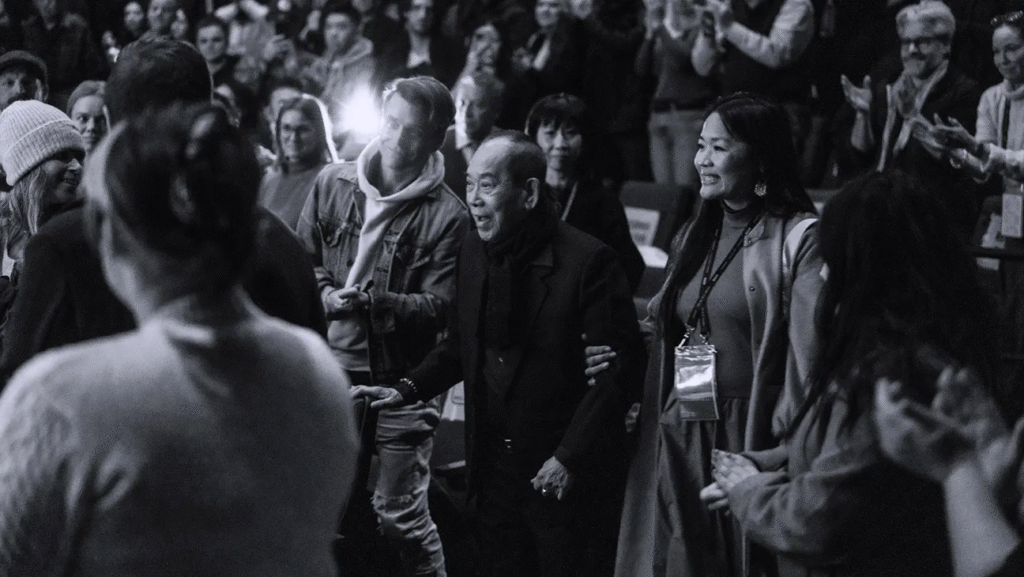
Sundance premiere of 'The Stringer' earlier this year.
Since its unveiling at Sundance, the documentary The Stringer has sparked intense debate, questioning the long-standing credit given for one of the most iconic photographs of the 20th century: the 1972 “Napalm Girl” image that helped galvanize anti-war sentiment across the globe.
This powerful photo—showing a terrified nine-year-old Phan Thi Kim Phuc running naked from a napalm attack in Trảng Bàng—was long attributed to Nick Út, then a young staff photographer for the Associated Press. But The Stringer, directed by Bao Nguyen, argues that Út may not have been the one who actually took the image.
Instead, the film points to Nguyễn Thành Nghệ, a little-known freelance photographer, as the possible true author. Using archival footage, eyewitness testimony, forensic analysis, and a new investigative narrative, the documentary suggests that credit for The Terror of War has been misassigned for over fifty years.
At its Sundance premiere, the crowd was stunned when Nghệ himself appeared—frail but determined—telling the audience in accented English: “I took the photo.”
The film follows a group of journalists—Gary Knight, Fiona Turner, Terri Lichstein, and Lê Văn—as they delve into the photo’s origins. According to Nguyen, the goal wasn’t just to stir controversy, but to give voice to someone long silenced.
“This isn’t about waiting for an institution to validate us,” Nguyen told The Hollywood Reporter. “It’s about letting Nghệ speak his truth.”
Despite the film’s quiet, reflective tone—praised by THR’s Sheri Linden as reminiscent of Joseph Conrad or Dostoyevsky—it has been met with resistance, especially from within the journalism community. Many have stood by Út, defending his legacy. When the AP issued a May 6 report affirming Út’s credit, tensions escalated.
But just ten days later, the World Press Photo Foundation released a bombshell of its own: citing new evidence, it suspended Út’s credit for the image—its first such decision in 70 years. They stated there was “substantial reason” to believe someone else, possibly Nghệ, took the photo.
Nick Út’s legal team slammed the decision as “deplorable and unprofessional,” with attorney James Hornstein denouncing what he called a decline in the organization’s credibility.
Now 74, Út has built a revered career on the photo and its legacy. For him, the challenge to his authorship poses a deep threat to a lifetime of recognition.
In response, director Bao Nguyen insisted that the goal was not to attack but to investigate.
“World Press brought in forensic experts. They approached this more independently than the AP, which reviewed its own former employee. That distinction matters.”
He admitted that the lack of applause when Nghệ took the stage at Sundance surprised him.
“But when Nghệ said, ‘I took the photo,’ that moment rose above any standing ovation,” he said.
Nguyen added that the criticism from established journalists—especially those who hadn’t seen the film—was disheartening.
“Journalism is about asking questions. The hostility to questioning whether Nick Út took that photo was shocking, especially from people I respected.”
During production, Nguyen said the team unearthed new details: Nghệ was a seasoned photographer among the group in Trảng Bàng that day. And the more they discovered, the more Nguyen became convinced of Nghệ’s claim.
“Do I have any doubts?” he said. “I’m hesitant to speak in absolutes. But yes—I believe Nghệ took the photograph.”
Still, the film offers no definitive “gotcha” moment. Nguyen describes it as a meditation on truth and memory—not a final verdict.
Distribution for The Stringer is still being finalized, but Nguyen confirmed the film will be released globally before the end of the year.
He also shared an uplifting note: Nghệ’s health has improved slightly since the World Press Photo announcement.
“That gives us more reason to make sure this story is shared, and his voice is heard.”