'Code of Silence'
In a television landscape saturated with crime dramas, Code of Silence stands apart with a refreshing twist—introducing lip-reading as its central investigative tool. Premiering on ITV and ITVX in the U.K. this May and set to launch on BritBox in the U.S. and Canada this July, the series redefines procedural storytelling through an intimate lens grounded in lived experience.
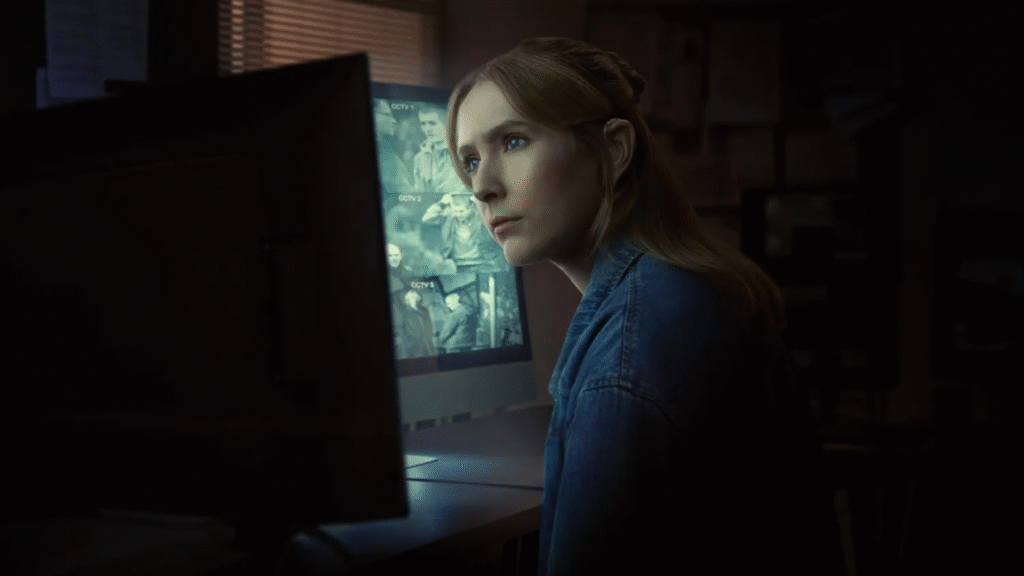
The authenticity behind the show flows directly from its creator and writer Catherine Moulton—partially deaf since childhood—known for her work on Baptiste and Hijack, and from its lead actress Rose Ayling-Ellis, who plays Alison, a deaf police canteen worker unexpectedly recruited into a covert operation for her unique abilities.
“Crime shows are constantly evolving, with audiences always in search of a fresh perspective,” Moulton told The Hollywood Reporter. “The notion that lip readers function as detectives felt intuitive to me, even natural.”
Backed by executive producers Bryony Arnold, Damien Timmer, Robert Schildhouse, and Stephen Nye for ITV Studios’ Mammoth Screen and BritBox, the series also features Kieron Moore (Vampire Academy, The Corps), Charlotte Ritchie (You, Ghosts), and Andrew Buchan (Broadchurch, Black Doves).
Moulton draws from personal history to inform the series. “Being partially deaf since childhood, much like Alison, I naturally gravitated to lip-reading. Initially, it was instinctual, but my curiosity led me to formal lessons.” She revealed that only 30–40 percent of speech is discernible through lip movements, even in perfect conditions. The rest depends on context, body language, and inference—making lip-reading a demanding and deeply analytical skill.
That complexity became a thematic driver in the show. The title Code of Silence emerged naturally, a metaphor not only for crime’s secrecy but also the unseen labor of decoding speech visually.
Scenes in the series—like Alison asking for a video zoom or needing someone to face her while speaking—are rooted in realism, woven seamlessly into the narrative without slowing its momentum.
Director Diarmuid Goggins helped visualize the nuances of lip-reading without making it seem convenient or gimmicky. One standout device displays words forming onscreen as Alison deciphers speech, granting viewers a visceral understanding of the mental gymnastics involved.
Balancing thriller pacing with educational value was no easy feat. “We didn’t want a drama lecture,” Moulton noted. “We wanted stakes, intrigue, and character depth—but grounded in truth.” Crime tropes like heists and surveillance are revitalized through Alison’s perspective, giving the familiar genre a distinct emotional gravity.
Subtitling lip-reading scenes presented a post-production challenge: the text had to serve two narratives—what Alison perceives and what the audience hears—without overwhelming either.
Rose Ayling-Ellis also contributed to the writing process, ensuring lip patterns aligned with visual realism and clarity. “Rose was instrumental in refining dialogue,” Moulton said. “We wanted to empower the character while staying honest to the daily nuances of deaf communication.”
Alison, initially conceived as a civilian outsider, offered a fresh entry point into police procedural terrain. She doesn’t arrive with a badge but with an overlooked skill that proves vital. Her arc—determined, underestimated, and refreshingly unapologetic—challenges tropes of disability and victimhood.
She’s not portrayed as fragile. She’s competent, fierce, and flawed—balancing work, care duties, and ambition. When given the chance to prove herself in law enforcement, it’s more than a plot beat—it’s a statement of recognition for talent society often fails to notice.
Code of Silence is not just a crime drama; it’s a meditation on communication, perception, and belonging. It invites viewers to reconsider how we define strength—and who we consider heroes—by letting them watch a woman read between the lines, quite literally.
As Moulton put it best, “We wanted to entertain—but also open a dialogue, show the intensity of lip-reading, and remind people how layered silence really is.”