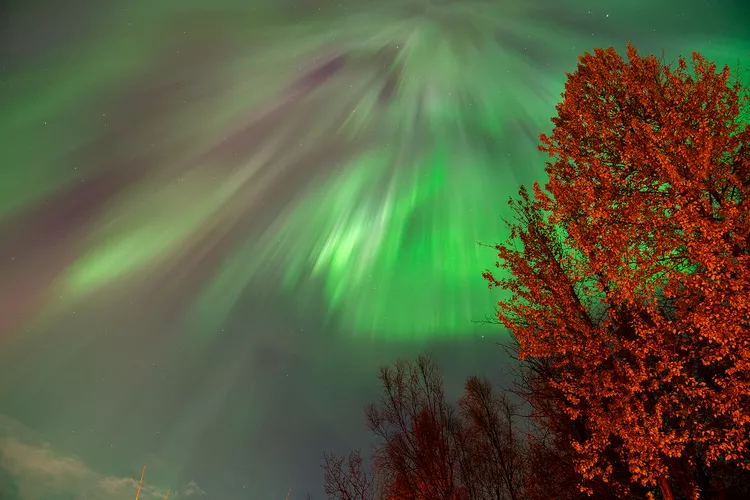
Northern lights illuminate the sky in Alaska in October 2024.
Northern lights are expected to dazzle the skies across parts of the U.S. on Tuesday, May 27, and Wednesday, May 28, with the more vibrant display forecasted for the first night. According to the Space Weather Prediction Center of NOAA, the aurora borealis will be visible due to elevated geomagnetic activity rated at level 5 on the Kp index—a strong level indicating good viewing conditions. While the lights are best seen shortly after sunset or just before sunrise, they won’t be visible during daylight hours.
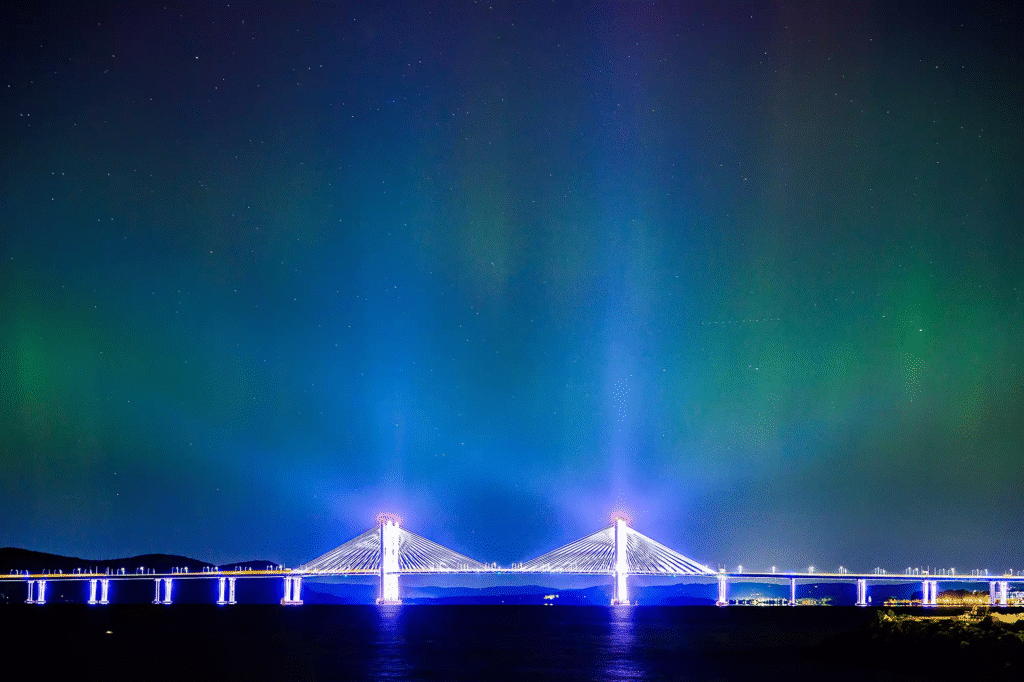
The northern lights occur when solar particles collide with gases in Earth’s atmosphere, creating glowing bands of green, purple, and red light. These events are normally restricted to polar regions, but geomagnetic storms can push the display farther south. This time, states like Washington, Idaho, Montana, North Dakota, Minnesota, Wisconsin, and parts of Michigan fall within NOAA’s aurora visibility zone.
Astronaut Nichole “Vapor” Ayers recently captured a stunning view of the lights from space, posting a viral video on X that further heightened excitement ahead of this week’s show.
To witness the aurora from Earth, viewers should head to dark areas away from city lights. A clear northern view of the sky offers the best chance. According to NOAA, auroras can sometimes be seen up to 1,000 km away from the geomagnetic activity center if skies are dark enough and conditions are right.
For those hoping to capture the lights on camera, modern smartphones equipped with Night Mode can produce impressive results. Just point your lens toward the sky, keep the phone steady, and let the camera work its magic.
In short, for those in the right areas, the next two nights promise a rare chance to catch nature’s most breathtaking light show—no special gear or tickets required, just look up.