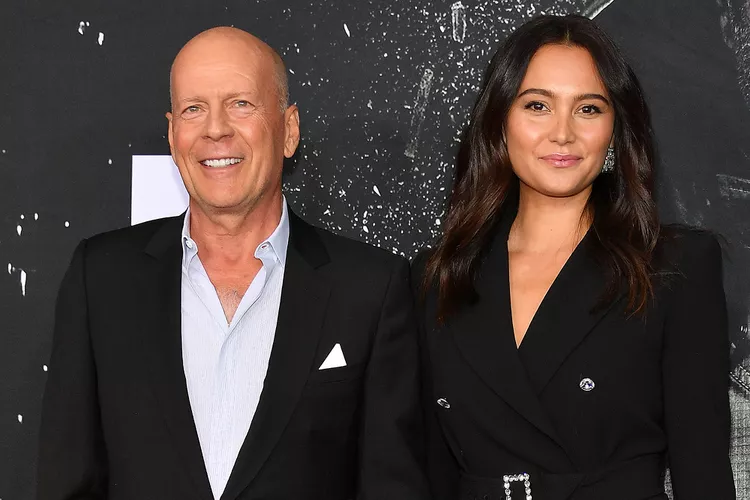
Bruce Willis and Emma Heming Willis in New York City in 2019.
Emma Heming Willis candidly reveals the struggles she faced after her husband Bruce Willis was diagnosed with frontotemporal dementia in 2022, describing a lack of guidance and support during those initial challenging times.
“We received a diagnosis and were sent away with no hope, no guidance, no nothing. I really had to figure out how to put resources into place,” Emma, 46, told PEOPLE. “And it was a lot of searching the internet, trying to figure things out.”
Thrust into the role of caregiver with no preparation, Emma — founder of Make Time Wellness — immersed herself in learning about Bruce’s condition. However, she admits that in doing so, she often forgot to take care of herself, even while raising their two daughters, Mabel Ray, 13, and Evelyn Penn, 11.
“I think that was my downfall,” she shared. “I thought that’s what I was supposed to do. What I’ve learned in all of this is that the most important person is the caregiver. We have to care for the caregiver, because when we care for ourselves, we can then show up for the person that we love.”
Since Bruce’s diagnosis, Emma has become a vocal advocate for caregivers. Her journey inspired her to write a book titled The Unexpected Journey, slated for release on September 9. The book is both a personal reflection and a practical guide for others facing similar battles.
“It’s the book that I still need,” she said. “I’m not at the end of this journey — I’m in the midst of it. It’s my own personal roadmap, and I hope it will help someone else. My hope is that one day, when a neurologist diagnoses someone with dementia, that is the roadmap they give to the new caregiver.”
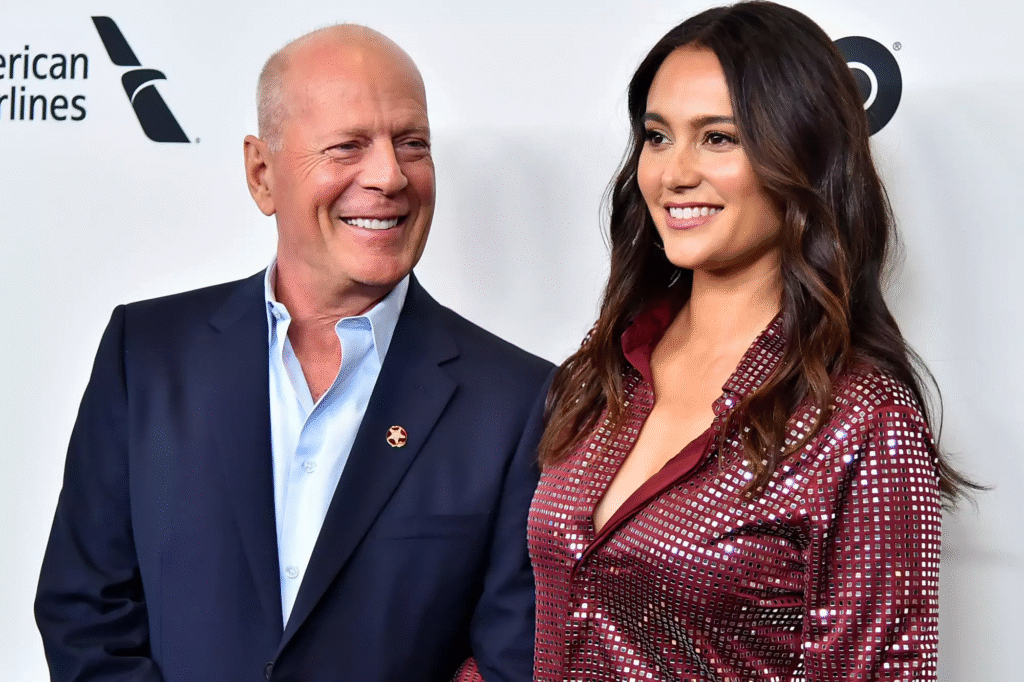
In writing the book, Emma interviewed 25 leading experts and uncovered a vital truth: “The best thing that you can do for the person you love is take care of yourself. Why? Because the ecosystem of care doesn’t work unless the caregiver is cared for.”
These insights have helped her become more grounded and present for Bruce.
In response to Bruce’s diagnosis, Emma sprang into action, assembling a supportive team — a privilege, she acknowledges, that not everyone has. “Most Americans are not able to do that,” she said. “So with that, it is my responsibility to pass along all this information that I’ve learned to the next caregiver.”
Emma’s advocacy has not gone unnoticed. She was honored at the Women’s Alzheimer’s Movement Forum in Las Vegas, hosted by the Cleveland Clinic Lou Ruvo Center for Brain Health on May 26.
Reflecting on the early days of Bruce’s diagnosis, Emma shared a video message ahead of her award. “I was so nervous in those early days because I was scared about the diagnosis getting out before we were ready for it to get out,” she said. “Hearing how people talk about dementia in hushed tones — that was not going to work for me.”
“There was nothing Bruce did that could have prevented it, and there was nothing that we as a family were going to be ashamed of,” she continued. “We have two young daughters, and I never wanted them to think this was some kind of dark family secret. No, we’re not going to do that. We’re going to come out, we’re going to be loud about it, and we’re going to make a difference.”
Her message to caregivers is clear: “Caregivers need to be cared for. They cannot do this alone, and it’s really important to rely on your community — and I didn’t know that in the beginning.”