Glenn Greenwald
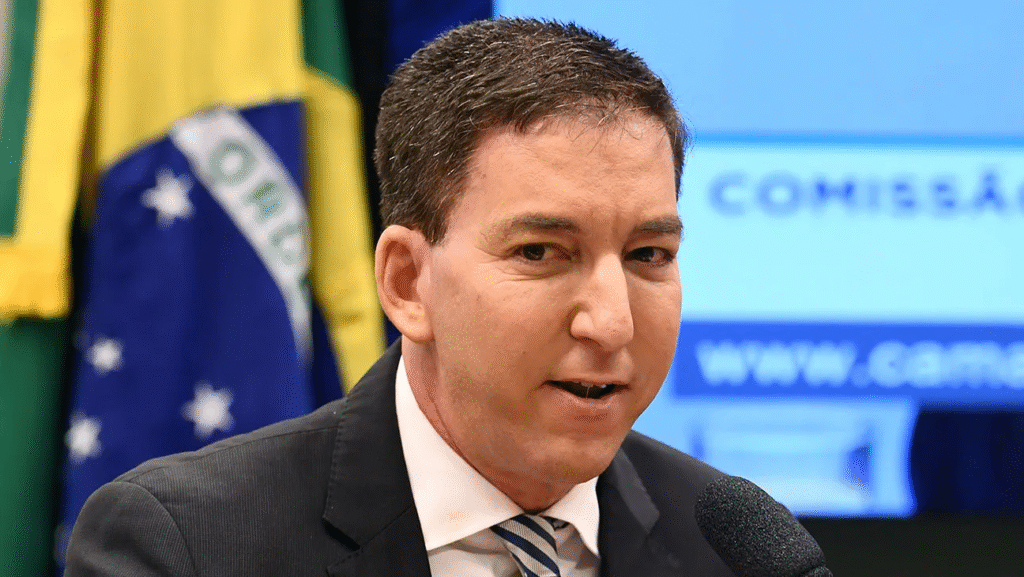
Social media ignited on Friday following the unauthorized release of explicit footage involving renowned journalist Glenn Greenwald. The videos, which quickly circulated across various platforms, were confirmed by Greenwald as authentic. In a statement shared on X, he denounced the leak as a “maliciously political” attack, aimed at undermining him through deeply personal and non-consensual exposure.
Now 58, Greenwald is no stranger to public scrutiny. A former litigation attorney turned trailblazing journalist, he rose to international prominence after collaborating with whistleblower Edward Snowden in 2013. His investigative reporting on the NSA’s global surveillance programs, published while at The Guardian, garnered a Pulitzer Prize in 2014 and cemented his status as one of journalism’s fiercest defenders of civil liberties.
His post-Snowden career included co-founding The Intercept with fellow journalists Laura Poitras and Jeremy Scahill. But in 2020, Greenwald parted ways with the outlet, citing editorial suppression of his critiques of then-candidate Joe Biden. He later migrated to Substack, building a loyal following of over 324,000 readers who support his independent journalism.
Greenwald’s impact has transcended journalism into popular culture. His role in the Snowden saga was chronicled in Laura Poitras’ Oscar-winning documentary Citizenfour, and actor Zachary Quinto portrayed him in Oliver Stone’s 2016 biopic Snowden. His 2014 book No Place to Hide was optioned by Sony Pictures, although the project never made it to screen.
Away from the headlines, Greenwald endured profound personal grief in 2023 with the untimely death of his husband, Brazilian politician David Miranda, who passed at age 37 due to complications from a gastrointestinal infection. The couple had built a loving home with two adopted sons from Brazil, embracing family life in the quiet sanctuary of Rio de Janeiro.
In addressing the video leak, Greenwald wrote
“Regarding the video content: I harbor no embarrassment or regret. The videos portray consenting adults in private, intimate scenarios, consensual and harmless.”
He continued
“What’s truly shameful is not the content, but the malicious weaponization of someone’s private life to discredit, distract, and silence. This kind of vindictive exposure reveals far more about the attackers than it does about their target.”
Greenwald’s response has been widely praised for its composure and honesty, reinforcing the principle that personal privacy is a human right even for those who dwell in the public eye. As the conversation unfolds, it serves as a sobering reminder of the digital age’s fragility when it comes to privacy, dignity, and consent.