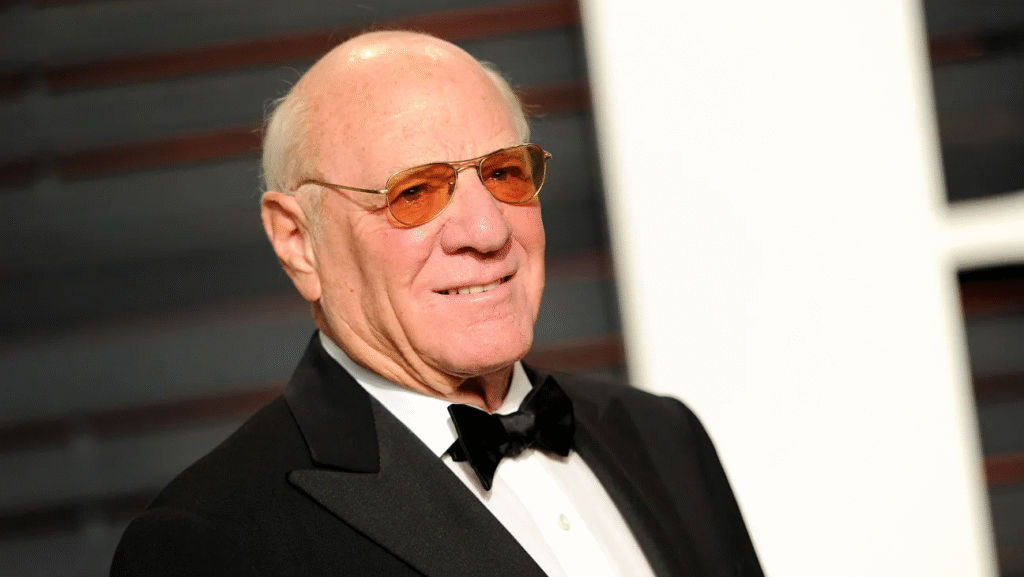
Barry Diller
Barry Diller’s vivid and no-nonsense memoir, Who Knew, feels like a final chapter in the era of truly candid Hollywood autobiographies not only for Diller himself but perhaps for a whole generation of industry giants. The memoir signals the end of a golden age in entertainment storytelling, recalling the punchy, personality-driven narratives of legends like Bob Evans (The Kid Stays in the Picture) and the unfiltered accounts of producers like Julia Phillips and Lynda Obst. Even those on Hollywood’s fringes, such as Scotty Bowers with his salacious Full Service, helped define the genre. And the likes of Bernie Brillstein, Jerry Weintraub, Christine Vachon, and Michael Ovitz once captivated readers with their insider perspectives.
But today, two dominant forces seem to be draining the vitality from Hollywood memoirs. First, the industry itself has grown increasingly cautious and corporate. Where daring individualism once reigned, algorithms and boardroom strategies now dictate content. Figures like Reed Hastings, for instance, have reshaped Hollywood with shrewd business models, but the result is less inspiration and more instruction, as his book No Rules Rules demonstrates.
Second, what used to be a forum for unfiltered retrospection has evolved into a tool for personal branding. The memoir has become less a literary confessional and more a polished prelude to a TED Talk or a curated podcast series. Works by Bob Iger (The Ride of a Lifetime) and Mark Burnett (Jump In!) exemplify this shift, offering strategic advice and motivational messaging over juicy storytelling. And with today’s heightened scrutiny on authenticity, many would-be memoirists err on the side of caution. (Bob Evans, by contrast, was famously loose with facts but compelling nonetheless.)
Still, the recent history of Hollywood is packed with stories begging to be told. The question is who will tell them with boldness and flair? It’s difficult to imagine today’s power players like Bryan Lourd, Kathleen Kennedy, Kevin Feige, Donna Langley, Bob Bakish, or Shari Redstone offering up truly unvarnished accounts. But perhaps we’ll be surprised.
A memorable Hollywood memoir doesn’t require dazzling literary skill—that’s what ghostwriters are for. What it does require is ego, personality, juicy gossip, a bit of recklessness, and a deep need to settle scores. But most importantly, it needs chutzpah, that rare quality of fearless self-expression that once defined the town’s biggest personalities.
There are still some who could deliver. Ron Meyer, Barbara Broccoli, Jason Blum, Ava DuVernay, John Landgraf, and Miky Lee all have the makings of unforgettable memoir subjects. And let’s not forget, likability is optional. Ari Emanuel, Ryan Murphy, Joel Silver, and Scott Rudin each possess the complexity and controversy that readers devour.
But time is ticking. Wait too long and the audience for these stories may vanish, leaving those memoirs unread and their audiobook narrators unneeded.
Gary Baum, senior writer at The Hollywood Reporter, will release his debut novel, In Pursuit of Beauty, about a memoirist and their ghostwriter, on July 1.