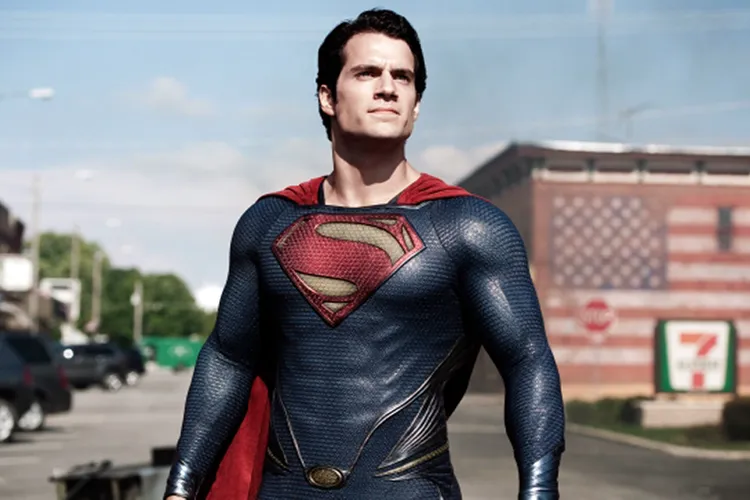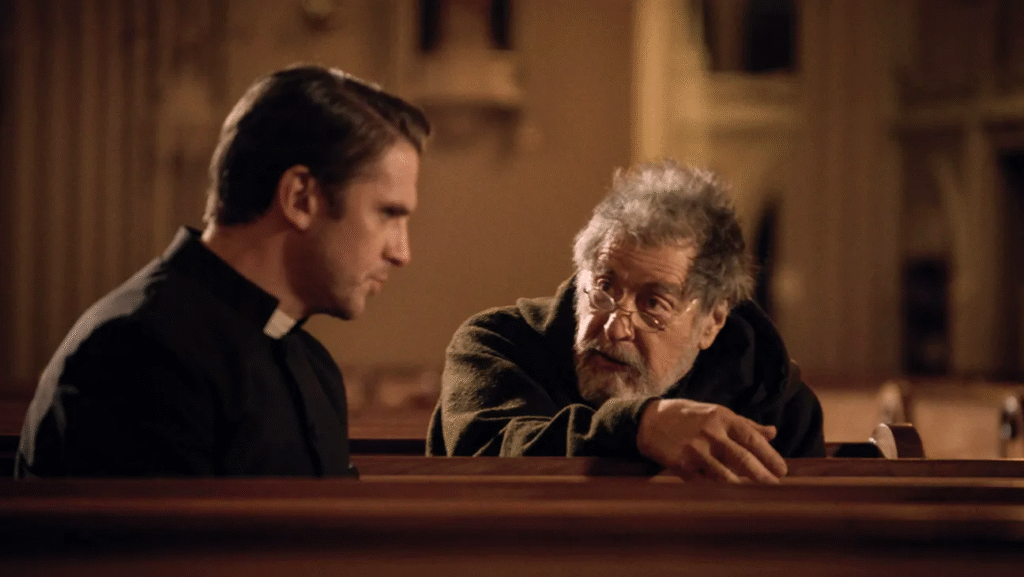
Dan Stevens and Al Pacino in 'The Ritual.'
Apparently, no one has called it quits on The Ritual, yet another try attempting to chase away fond memories of William Friedkin’s 1973 iconic The Exorcist. In a bid to assert their flick as a genuine recounting of terrifying historical events, the creators of this B-movie staunchly proclaim their narrative is pulled from real life.
“The following is based on true events,” the screen solemnly announces at the onset. “This story represents the most thoroughly documented case of demonic possession in American history.”
Afraid you might forget this declaration, an end-credit crawl reiterates stubbornly, reminding us that “The 1928 exorcism of Emma Schmidt remains the most thoroughly documented and well-known exorcism in American history” with pictures of the real priests displayed again, as if assuming audience members suffer from amnesia. Alas, the veneer of authenticity offers little sparkle to the bland, not-at-all-scary narrative, anchored in 1928 Iowa. Here, young Emma (Abigail Cowen, robustly tackling her grueling role) exhibits behaviors demanding priestly and cinematic attention. Father Joseph Steiger (Dan Stevens) dismisses the notion of malefic forces, but seasoned German priest Father Theophilus Riesinger (Al Pacino) bearing a name too perfect not to be genuine identifies the Devil’s handiwork. The local bishop (Patrick Fabian, revisiting exorcism territory post-2010’s The Last Exorcism) authorizes the rites.
Thus unfolds a regiment of attempted exorcisms, with the two priests endeavoring tirelessly to execute the sacred ritual while Emma retaliates with demonic possession stunts the loftiest a low-budget film can afford. She levitates, speaks in eldritch tongues, regurgitates, and even rips a good chunk of scalp from a young nun (Ashley Greene of Twilight fame) naïvely providing assistance. Presiding over the chaos is stern Mother Superior, played by Patricia Heaton, famed for Everybody Loves Raymond a curious choice when aiming to invoke terror.
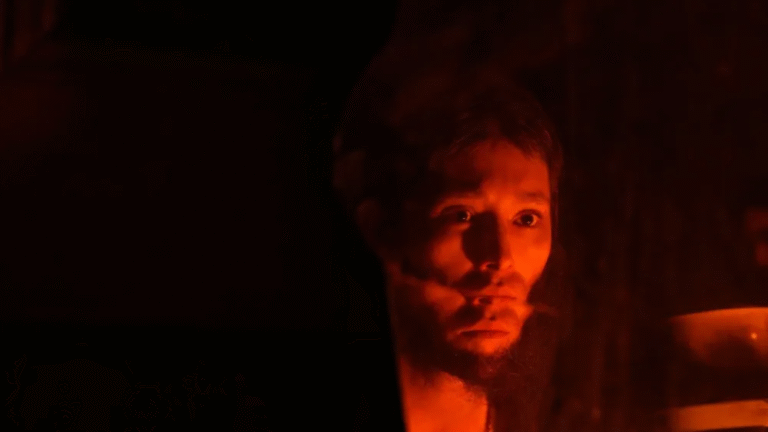
Director and screenwriter Midell (The Killing of Kenneth Chamberlain) immerses us in the supposed intensity with ample handheld cameras and zoom lenses, standard fare for parodic comedies. Meanwhile, the lighting suggests the theater’s bulbs are failing, casting scenes in near darkness. Midell also relishes plenty of reaction shots focusing on a shocked Stevens, leaving viewers unsure if the actor is present or second-guessing these career decisions.
Regarding Pacino, encountering the revered actor settling for B-movie status raises few eyebrows, the reasons for which remain best surmised by him (or his accountant). Adopting an accent favored by seasoned actors (reminiscent of his role in Amazon’s Hunters), Pacino delivers commendably, steering clear of those theatrical exaggerations coloring his recent performances. Which beckons the queasy query: Why choose this film to hold back his usual exuberance?