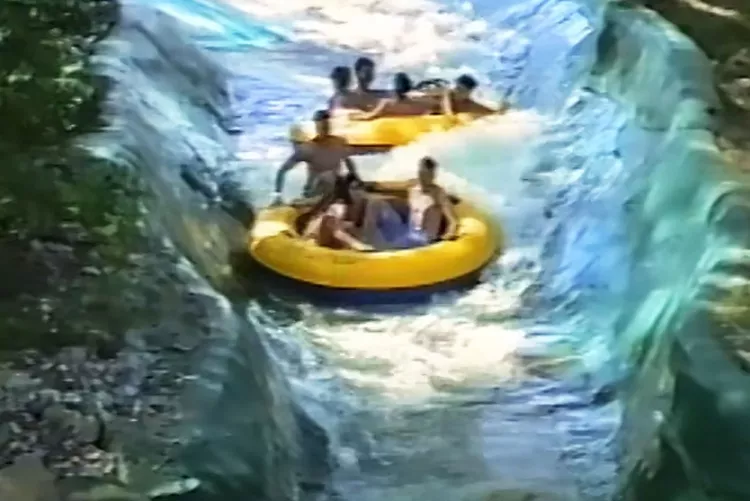
Action Park in New Jersey.
Action Park, once a legend in New Jersey’s amusement history, operated from May 1978 until its closure in September 1996. Known for rides that were both thrilling and terrifying, the park’s legacy still echoes, especially after the release of the 2020 documentary Class Action Park.
More than forty five years since its opening, the name Action Park still stirs fascination and disbelief. Located along Route 94 in Vernon, New Jersey, the park became a magnet for adventurous teenagers and bold families. It was divided into three themed areas: Alpine Center, Water World, and Motor World. But more than fun, what defined the park were its wild, often dangerous attractions.
Unlike traditional theme parks where engineers carefully design rides, Action Park followed a different approach. Many of its attractions were conceived by in house staff without professional training. “Most of us had no engineering background,” admitted Ed Youmans, a former operations manager.
The founder, Gene Mulvihill, encouraged boldness over caution. He often modified rides on a whim, chasing adrenaline over safety. Journalist Seth Porges noted that Gene was obsessed with making everything bigger, faster, and riskier.
Here are five unforgettable revelations from the documentary:
The Cannonball Loop
This ride was a water slide ending in a full vertical loop. Sounds outrageous? It was. Early riders came out bleeding, and maintenance crews found teeth embedded in the foam padding. Security director Jim DeSaye recalled, “People got hurt before we even finished installing the safety gear.”
A Park Without Engineers
Gene believed excitement mattered more than engineering. As a result, rides were often unsafe for the average person. Bob Krahulik, head lifeguard, said bluntly, “They looked cool on paper, but people got hurt.”
The Rolling Ball That Escaped
One of the more bizarre rides involved a giant ball filled with metal bearings. It was meant to roll smoothly down a PVC track. But during a test, the track melted in the heat, the ball broke loose, flew across Route 94, and landed in a swamp. “It was insane,” said CEO Andrew Mulvihill.
Faking Insurance
As Action Park’s injury list grew, Gene created a fake insurance company under Great American Recreation. This allowed the park to operate without real coverage. The New York Times later reported that Gene forged documents from 1977 to 1981. He was charged with over one hundred counts of fraud and received fines and probation, along with a large penalty against his corporation.
The Alpine Slide Death
The Alpine Slide stretched nearly three thousand feet down a concrete track. Riders used sleds with brake handles, but many couldn’t control their speed. Injuries were common, ranging from bruises to broken bones. One tragedy occurred in 1980 when George Larsson Jr. was thrown from his sled, struck a rock, and died days later. He was just nineteen and had been preparing to be best man at his brother’s wedding.
The park tried to cover it up by claiming the rider was an off duty employee. But the truth came out in court, and the family received a settlement of one hundred thousand dollars.
Gene Mulvihill passed away in 2012 at the age of seventy eight, but the legend of Action Park lives on. Its legacy is a mix of wild memories, reckless invention, and unforgettable danger.
Class Action Park is now streaming on HBO Max.